Capabilities · Cold Storage

Cold storage is where temperature integrity is won or lost.

Forty thousand metric tons of cold storage capacity across two port-co-located hubs in Kaohsiung and Fuzhou — integrated with processing within the same operational envelope, WMS-tracked, and held to the standards the trade book requires. Cold storage is not a destination for our cargo. It is the operational discipline that decides whether cargo arrives intact.

~40,000 MT
Group cold storage
capacity
2 hubs
Kaohsiung Xiaogang
+ Fuzhou Mawei
24/7
Continuous temperature
monitoring
Cold storage operations · Baixian Trade
The Stakes

Temperature is the substance, not the wrapper.

Squid texture, saury oil retention, shrimp colour, octopus firmness — every specification a buyer pays for is a function of unbroken temperature control between catch and delivery. A four-hour gap at the wrong stage of dispatch can move a shipment from premium grade to feed grade. The most common origin of seafood trade disputes is not the original product but a cold storage failure somewhere downstream of it.

For trade counterparties, the question is not whether Baixian operates cold storage. It is how the cold storage is run, what happens during the handoffs, and whether the operational envelope ever opens. The rest of this page is that answer.

Capabilities

Six operational claims,
six factual backings.

Capability claims that hold up under counterparty scrutiny. Each one specific to facility, system, or operational fact — not generic 3PL language.
01 · Zoning

Multi-temperature zoning

Frozen, semi-frozen, and chilled holding within each facility, with separate dispatch lanes per zone. Product specification matches optimal hold temperature without migration through inappropriate zones.

02 · WMS

Full-shelf position management

Intelligent operating system at the Fuzhou hub; standard WMS at Kaohsiung Xiaogang. Every pallet position tracked from intake to dispatch. Deployed at Fuzhou in 2017 and refined through eight years of operation.

03 · Monitoring

24/7 monitored rooms

Continuous temperature monitoring across both hubs. The Fuzhou bonded zone runs on a China Telecom Global Eye system with real-time data transmission to customs. Three-month data retention available on request.

04 · Integration

Co-located processing

Cold storage and processing share the same operational footprint at BXGC-FAC-1 in Fuzhou and adjacent footprint in Kaohsiung. Product moves between storage and processing line without leaving the cold envelope. Structurally unusual; designed-in, not retrofitted.

05 · Bonded

Bonded zone integration

At Fuzhou, 5,000 MT of customs-bonded capacity sits inside the same operational shell as the 25,000 MT non-bonded zone. Cargo transits between bonded and non-bonded status with customs paperwork rather than physical relocation — a capability that extends to trade-book operations as needed.

06 · Port

Port co-location

Both hubs sit at major export ports. BXTW-FAC-2 at Port of Kaohsiung. BXGC-FAC-1 at Mawei within the Fuzhou port complex. Dispatch from storage to vessel measured in hours rather than days. Physical proximity, not regulatory convenience.

Two Hubs

Two port-co-located
facilities.

~40,000MT total group cold storage capacity across both hubs
Honest scale for the audience. Not Lineage-scale, not Americold-scale — institutional scale for a Taiwan / Greater China seafood operation, with the right port positioning and the right role split between the two facilities.
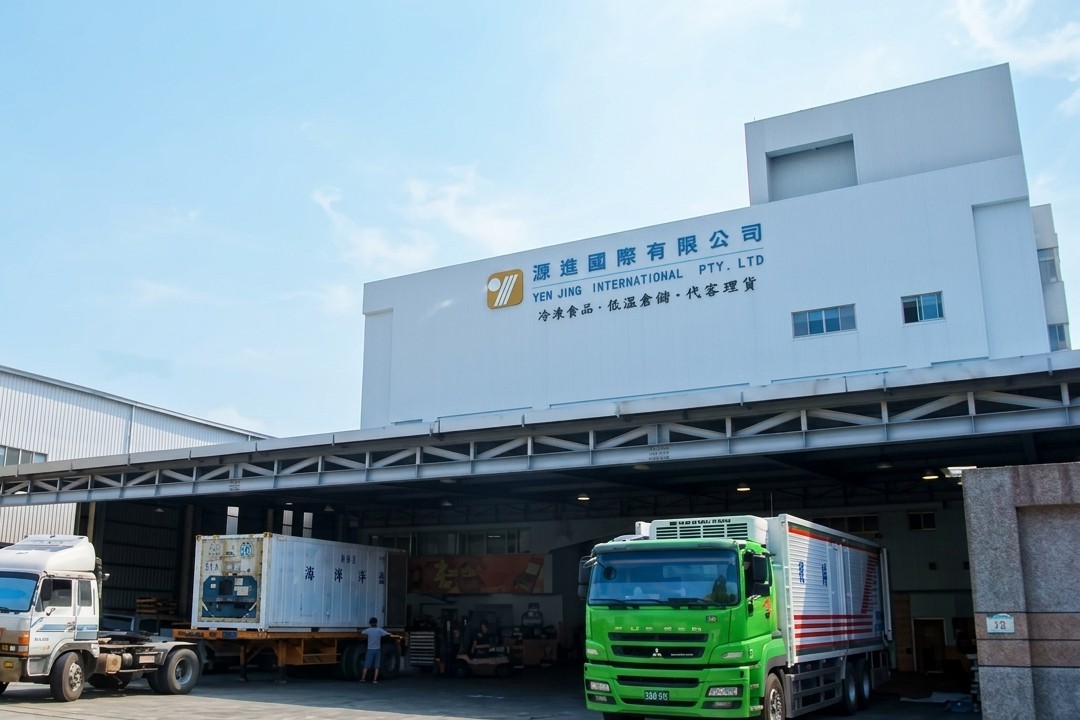
Exterior of the Kaohsiung Xiaogang cold storage facility — Yen Jing International signage above loading bays with refrigerated trucks and containers at the dock.
Kaohsiung Xiaogang Cold Storage Plant
BXTW-FAC-2 · Kaohsiung Xiaogang
Port of Kaohsiung
Taiwan

Kaohsiung Xiaogang Cold Storage

Dedicated cold storage facility — the Taiwan-side trade book's hold and dispatch base.
Capacity
~10,000 MT Cold storage · multi-temperature zoning
Role
Dedicated cold storage Intake, hold, dispatch · processing access via co-located BXTW-FAC-1 (Qianzhen)
Port
Port of Kaohsiung Adjacent · short cold-envelope transit to dock
Certifications
HACCP 7WH0001 EU listed · TFDA HACCP
Operations
Multi-temperature zoning Frozen, semi-frozen, and chilled holding · WMS-tracked positioning · 24/7 temperature monitoring
Address
高雄市小港區同利路 15 號 No. 15 Tongli Rd., Xiaogang Dist., Kaohsiung City, Taiwan
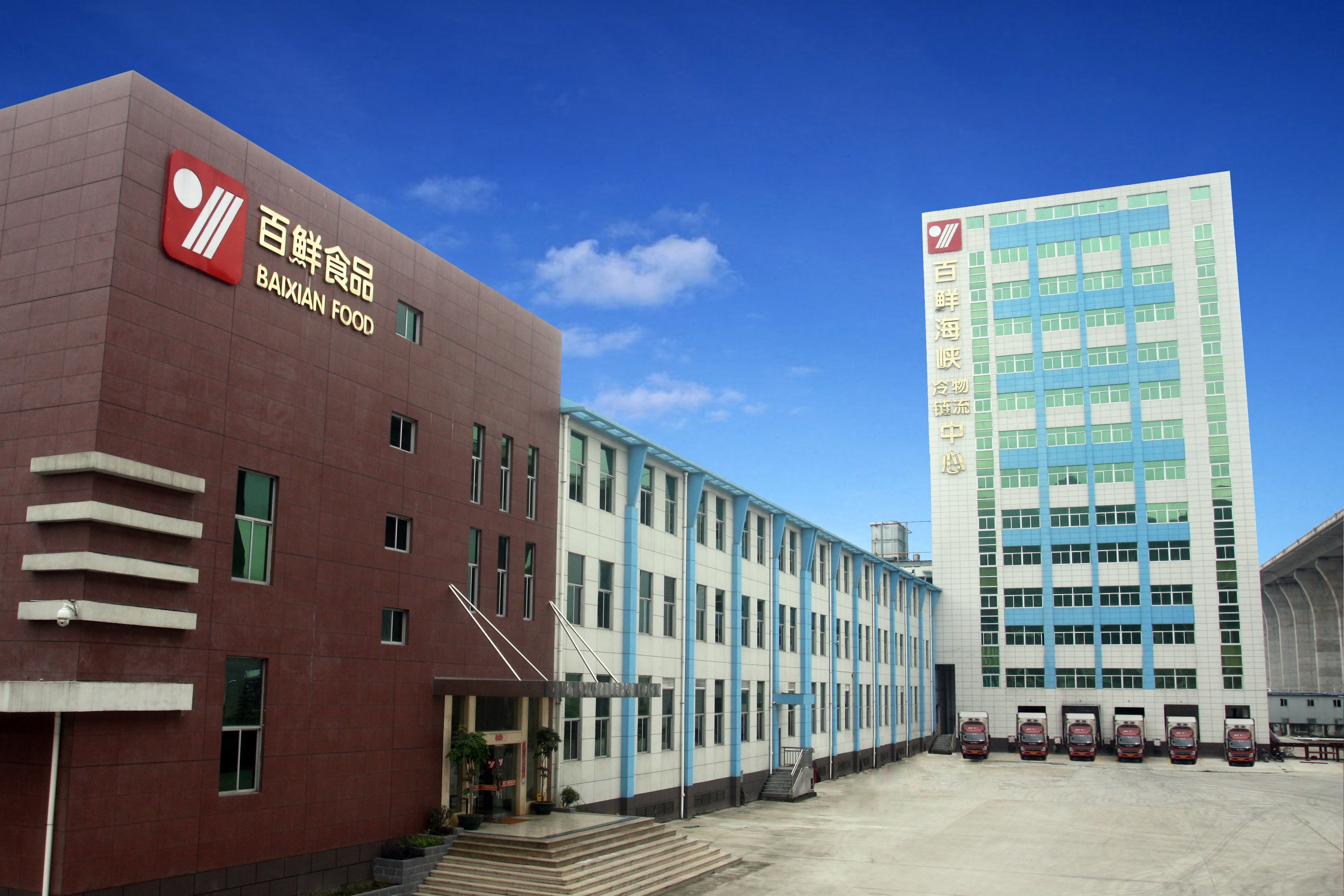
Exterior of the Baixian Strait Logistics Center in Mawei, Fuzhou — Baixian Food building on the left, cold logistics center tower on the right, refrigerated trucks loading at the dock.
Baixian Strait Logistics Center · Fuzhou
BXGC-FAC-1 · Fuzhou Mawei
Fuzhou Port Complex
Fujian, China

Baixian Strait Logistics Center

Integrated processing + cold storage + customs bonded — the Greater China operational anchor.
Capacity
~30,000 MT total ~25,000 MT non-bonded · ~5,000 MT customs-bonded zone
Role
Integrated processing + storage + bonded Cold-side processing inside the operational envelope · first customs bonded cold storage in Fujian FTZ Fuzhou area
Port
Mawei District Within the Fuzhou port complex · Fujian Free Trade Zone (Fuzhou Area)
Certifications
HACCP 3500/02246 GACC (AQSIQ 3500/02246) · EU listed · Customs FTZ designation
Monitoring
24/7 China Telecom Global Eye Real-time data transmission to customs · 3-month data retention
Address
福建省福州市马尾区长安投资区长发路 7 号 No. 7 Chang Fa Rd., Chang An Investment Zone, Mawei, Fuzhou, Fujian, China
A Journey

From the Falklands
to Fuzhou — cold storage as the spine of an Illex argentinus trade.

A concrete trace of one species, one trade, six stages — vessel hold at origin through to destination port, with cold storage as the operational spine that decides whether spec is preserved end-to-end.

Stage 01 · Catch

Frozen at sea

Falklands or Argentine shelf grounds
Industrial freezing on the contract fleet
−25 °C at sea
Cargo frozen at sea on the contract fleet at industrial freezing temperature. Temperature continuity begins at the vessel hold, not at the port — the contract fleet structure means catch and intake handoff are operationally coordinated, not separately contracted.
Stage 02 · Intake

Port-to-zone, same day

Port of Kaohsiung — BXTW-FAC-2
Intake inspection by SGS / Bureau Veritas / Intertek
−22 °C, logged on receipt
Container off-loaded directly into the cold storage intake bay. Temperature logged on receipt; hold zone assigned by product specification. Independent intake inspection by SGS, Bureau Veritas, or Intertek captures the baseline against which downstream condition is measured.
Stage 03 · Hold

WMS-tracked position

BXTW-FAC-2 · Kaohsiung Xiaogang
Pallet position tracked from receipt
−22 °C, continuous monitoring
Pallet held in the assigned zone, position tracked by WMS. Duration depends on downstream commitment — processing order, direct shipment, or trans-shipment to the Fuzhou hub. No product migration through inappropriate zones; no manual rotation that loses the temperature trace.
Stage 04 · Processing

Inside the cold envelope

BXTW-FAC-1 · Kaohsiung Qianzhen
Where the trade spec calls for processing
−18 °C operational envelope
If the trade specification calls for cutting, sizing, IQF, or packing, the pallet moves to the processing line and returns to cold storage without leaving the operational envelope. Cold-side processing inside the cold operation, not outside it. This is the integration that pure-play 3PLs structurally cannot replicate.
Stage 05 · Dispatch

Storage to vessel in hours

Port of Kaohsiung — vessel loading
Reefer container, dock-side
Dispatch temp logged
Pallet pulled from storage and loaded into the reefer container at the facility dock. Container delivered to vessel at port within hours, not days, of pull. Dispatch temperature logged for handover documentation — the closing record on the intake-to-dispatch temperature trace.
Stage 06 · Destination

Trace ends at the buyer

Destination port — Japan, mainland China, Korea, Europe
End-to-end temperature trace available on request
Envelope never opens
Cargo arrives at destination port with full intake-to-dispatch temperature trace available on request. The operational envelope from Falklands vessel hold to destination vessel hold never opens. Disputes — when they arise — can be resolved against the trace, not against assertions. View Illex argentinus page
Integration

Cold storage is the spine.

From Sourcing

Cargo from the contract fleet — Argentine and Taiwan-region distant-water vessels — enters cold storage at intake with temperature continuity preserved from the vessel hold. Sourcing and cold storage are operationally adjacent, not separately contracted.

How we source

Alongside Processing

Cold storage and processing share the same operational footprint at both hubs. Cold-side processing happens inside the cold envelope, not outside it. The integration is structural — designed-in rather than retrofitted.

How we process

Into Trade Execution

Dispatch timing — vessel scheduling, reefer loading, handover documentation — is coordinated from the same operational footprint that holds the cargo. The cold storage operation ends at the destination port, not at our gate.

How we execute
Engage

Start a trade conversation.

Trade discussions begin with a specification — species, grade, volume, destination, timing — and a context. The trade team responds with availability, indicative pricing, and the cold storage and processing pathway that backs the offer. Initial response within 48 hours.

Direct contact

Trade enquiries are handled by the trade team, in coordination with operations on the ground at the relevant facility. Bonded storage enquiries route through a separate service inbox — see the bonded storage page.
RFQ · Form preview
~3 min
Species*
e.g., Illex argentinus, frozen tubes
Grade / Spec*
e.g., 8/12 tail count
Volume
e.g., 200 MT
Destination
e.g., Tokyo / Pusan / Rotterdam
Timing*
e.g., Q3 2026 dispatch
Contact channel
Email · Phone · WeChat · Other
Notes
Storage pathway notes, processing requirements, certification needs…
Routed to trade team CS-BXTRADE-2026-NNNNNN